Written by Aaisha Naaz, (B.Sc. Biotech, M.Sc. Organic Chemistry)
Table of Contents
So, you’ve just brought home your first tarantula. It’s still in the little plastic cup it arrived in, and you’re already wondering where it will live for the next ten to fifteen years(females). Your spider will spend almost all its life in an enclosure, so the setup affects its health, stress levels, and how easy daily care is.
This guide walks you through five rules for choosing the best beginner tarantula enclosure. Start with the type of spider you have, then decide the size of enclosure. Next, make sure the enclosure has good airflow, a secure lid, and substrate and hides that suit your spider. Get those right, and you’ve got a home your tarantula can actually thrive in.
5 Tarantula Enclosure Rules Every Beginner Needs
A beginner tarantula enclosure doesn’t need to be fancy. It needs to be the right size, well ventilated, escape-proof, and suited to how your species moves. Here are five rules to keep in mind before you buy your first tarantula enclosure:
- Match the Enclosure to Your Species
Before you buy an enclosure, it’s essential to know what type of tarantula you own. Find out whether your spider lives on the ground (terrestrial), burrows (fossorial), or lives in the vertical plane (arboreal).
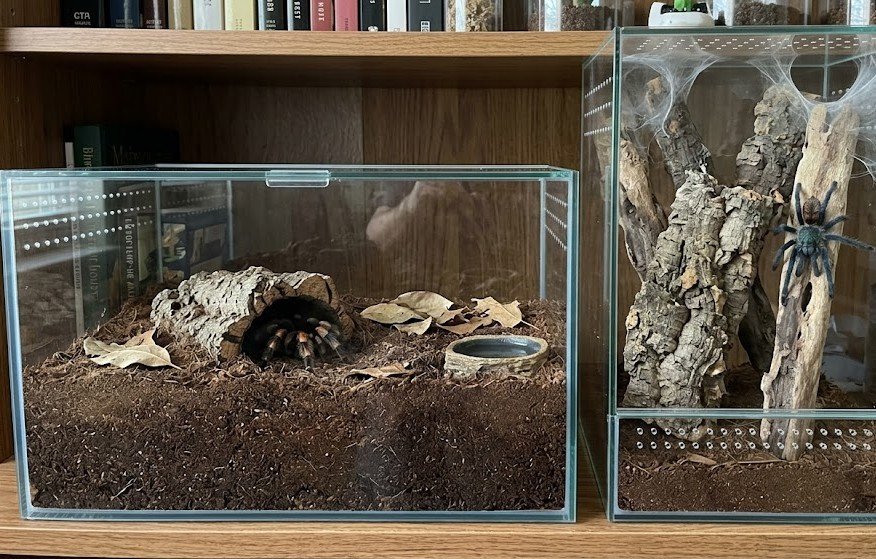
- Ground-dwelling or terrestrial species thrive where the floor gives them room to roam and the height is low enough that a fall won’t injure them.
- By contrast, tree-dwelling (arboreal) species need height and sturdy vertical decor for webbing and climbing.
- Burrowing species, often called fossorial, need deep substrate to dig, usually 6 inches (15 cm) or more.
- Size It Using the Diagonal Leg Span (DLS)
Tarantula enclosure size depends upon your spiders’ size. A bigger enclosure isn’t automatically better. A tank that’s too large makes your spider harder to find, harder to monitor while it feeds, and harder to keep at the right humidity. Similarly a smaller tarantula enclosure doesn’t work for large-sized species.
Most keepers size an enclosure using the diagonal leg span (DLS), which is the distance from the tip of one front leg to the tip of the opposite rear leg.
For many terrestrial species, a floor length of about three times the DLS is a common starting point, with a low height. For example, a 5-inch (13 cm) DLS suggests a floor length of about 15 inches (38 cm) and a height of no more than 1.5 times the DLS.
Arboreal species need the opposite balance. Their enclosure should be roughly three times the DLS in height, with a footprint just big enough to hold climbing decor.
- Keep the Air Moving and the Humidity Right
Enclosures should allow fresh air to move through so damp air doesn’t build up and grow mold. Cross-ventilation is the best option to achieve it.
Use an enclosure with small vents on opposite sides, or a mesh panel on one side with a vent on the other. Keep the openings small, though, because too much airflow dries the substrate fast.
Tarantula enclosure ventilation depends entirely on the species. For example, terrestrial species from dry habitats want mostly dry substrate. Similarly, many tropical arboreal species want more humidity, which you can supply by keeping one corner slightly damp.
Check your species’ humidity range before you set up your tarantula enclosure.
- Lock Down the Lid and Seal the Gaps
Tarantulas escape more easily than you can expect. A lid that looks secure but lifts with a fingertip is a real problem.
Before you walk away, press on each corner and try to lift it. Choose an enclosure with locking clips or a lid that fits snugly.
Similarly, any gap wider than their body is an invitation, and young spiders can squeeze through holes you think are too small. So, keep openings small and mesh tight.
- Give them Substrate and a Hide.
Your tarantula enclosure needs a substrate layer at a depth suited to the species, and at least one hide where the spider feels safe.
For most terrestrial species, add at least about 3 inches (7.5 cm) of substrate. Burrowers need a deeper substrate.
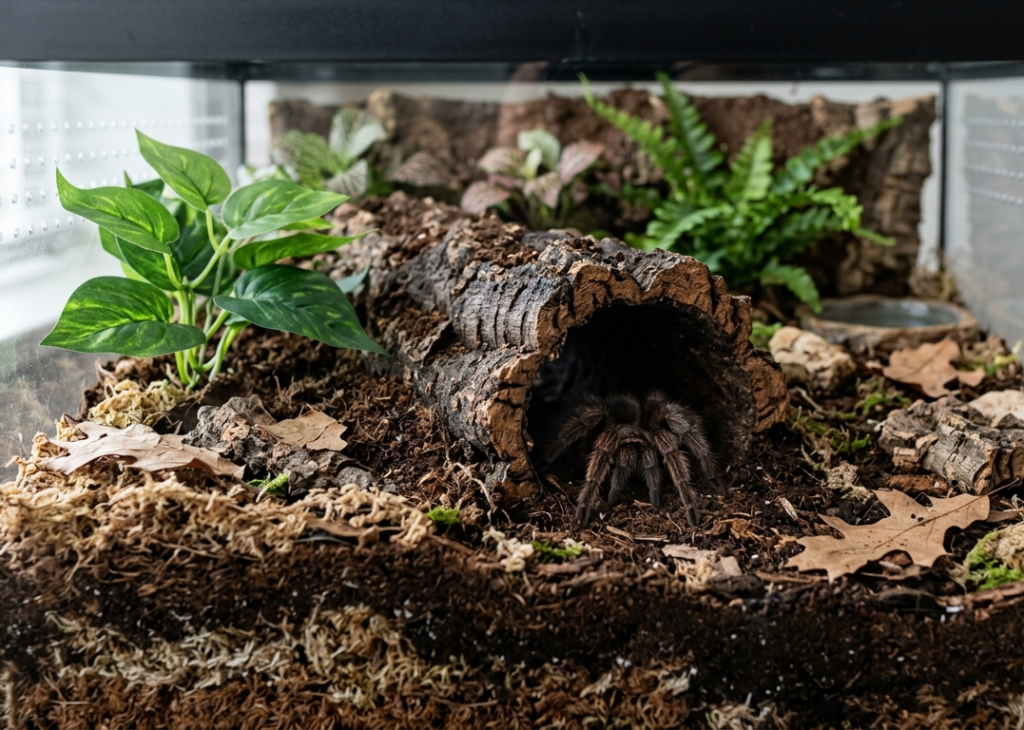
A half-buried cork tube or a hollow piece of bark works well as a hide for most species. Keep decor minimal at first, since loose items can collapse or trap a spider during a molt.
For a full breakdown of substrate types, see my separate substrate guide.
3 Best Tarantula Enclosure Materials
Tarantula enclosures come in many types, including glass, acrylic, and plastic tubs. Each has its own pros and cons. Let’s discuss each one.
- Glass
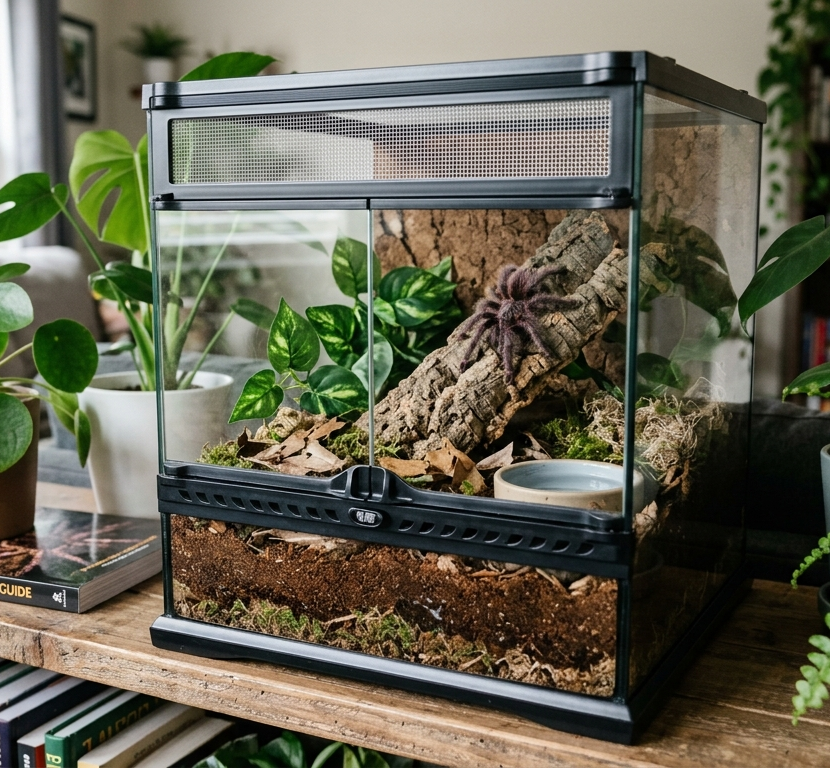
It is clear, sturdy, and easy to see into. It’s heavy, and it holds humidity well only if the lid is sealed properly. But it’s a bit pricey if you are choosing a good front-opening tank.
- Acrylic
It is lighter and scratches more easily, but it’s a good option if you want visibility without the weight of glass.
- Plastic tubs
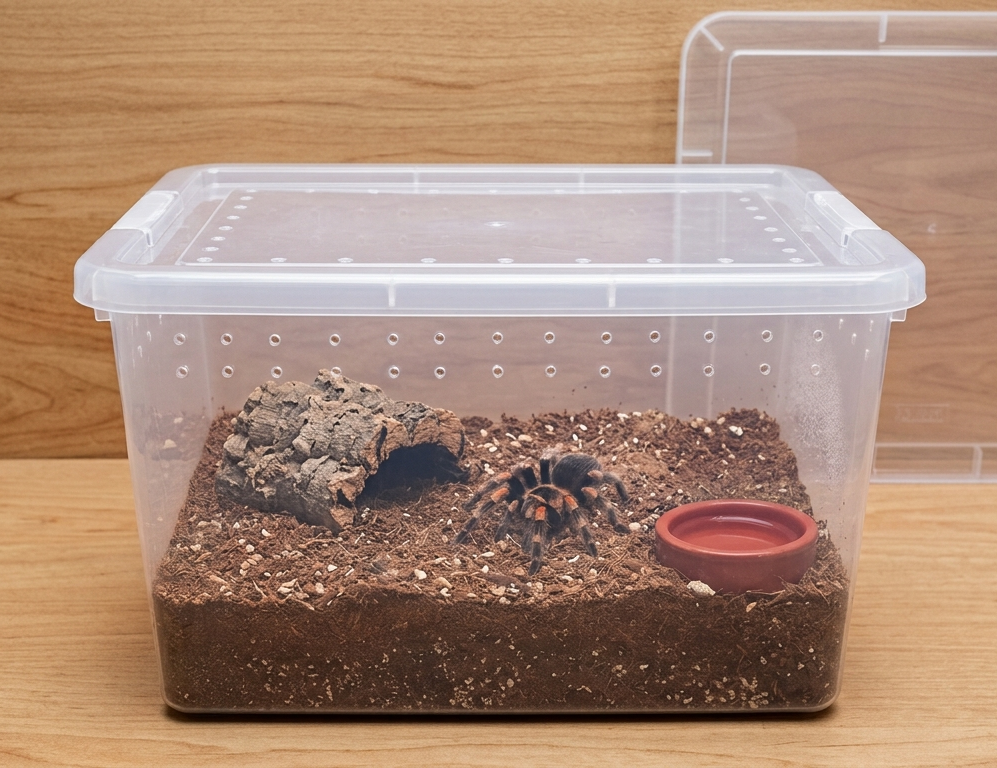
They are cheap, light, and widely available, and they can hold moisture reasonably well.
However, their cheap lids can bend or leave gaps, so check the fit before you start using them.
As a beginner, I’d buy a front-opening glass or acrylic tank so I can watch my spider without opening the enclosure every time. Fewer openings mean fewer chances of a surprise escape.
But if your budget is tight, a well-fitted plastic tub with proper ventilation works perfectly.
Budget Tarantula Enclosures and Their Prices
To make things easier for you, here’s a rough price guide:
- Budget (US$20-40, £15-30, A$30-60)
Plastic tubs and basic tanks fit this budget. You’ll have to check the lid and ventilation carefully.
- Mid-range (US $50-100, £40-80, A$80-150)
In this range, you can easily get good-quality glass or acrylic tanks with secure lids and proper ventilation.
- Premium (over US$100, £80, A$150)
The premium price range has large front-opening tanks with precise climate control. However, you don’t need this for a first spider.
6 Common Beginner Mistakes while Setting Up a Tarantula Enclosure
Here are six common mistakes that cause the most trouble:
- Tiny tanks that leave no room for a hide or substrate.
- Tubs with no ventilation that look fine on the shelf but cause problems within weeks.
- Soggy substrate invites mold and mites, so dampen only one corner.
- Leaving uneaten prey in the tank. Crickets can chew on a molting or resting spider, so remove leftovers within a day.
- Handling your tarantula too soon or too often. It stresses the spider and increases the risk of falls and bites, so let it settle and leave it alone.
- Using pine or cedar. Their oils and resins can harm your spider, so use cork bark or hardwood instead.
Additionally, avoid tall enclosures for terrestrial species. Extra height only increases the risk of a serious fall.
4 Quick Steps to Set Up Your First Tarantula Enclosure
If you set up your enclosure before your spider arrives, you have to fumble with a stressed animal in your hands. Here are four quick steps for setting up your first tarantula enclosure:
- Keep the enclosure away from direct sunlight, heaters, and draughts.
- Add substrate to the right depth, and lightly dampen one corner if your species needs it.
- Place a hide, then check that the spider can enter and exit easily.
- Use a thermometer to check the temperature and make sure it stays within your species’ range.
Final Thoughts
The right tarantula enclosure depends on your species, so choose one that fits. Check your spider’s size, natural habitat, and humidity needs, then choose an enclosure that fits. Follow the five rules above to help your spider thrive in the right home.
Frequently Asked Questions
- How big should a tarantula enclosure be?
Start with your spider’s diagonal leg span (DLS). Measure the distance from one front leg tip to the opposite back leg tip.
- How deep of a substrate does a tarantula need?
Check your spider’s specific needs to determine substrate depth. For example, most terrestrial species need at least 3 inches (7.5 cm) of substrate. Burrowing species need more, usually 6 inches (15 cm) or deeper, to dig a safe space.
- Is glass or acrylic better for a tarantula enclosure?
Both work well. Glass is sturdier and scratches less, but it’s heavier and costly. Acrylic is lighter and gives you clear viewing, but it scratches more easily. As a beginner, you can opt for a front-opening tank so you can check on your tarantula without opening the lid every time.
- What if my tarantula climbs the lid?
Check the lid gap and the height first. If the spider regularly reaches the top, the enclosure is probably too tall. Add substrate and make sure the lid locks.
- When do I upgrade my tarantula enclosure?
Upgrade when your spider has outgrown its space or the current enclosure no longer meets the DLS rule. There’s no fixed schedule, and a sling may need several upgrades before adulthood.