Written by Aaisha Naaz, (B.Sc. Biotech, M.Sc. Organic Chemistry)
Table of Contents
If one thing can turn a perfectly innocent tarantula setup into a surprisingly complicated research project, it is tarantula substrate. Coco coir, topsoil, peat, soil mixes, bioactive substrates, ready-made blends, etc., are good substrate options. However, with so many options available, choosing the right one can feel overwhelming.
So, what actually works? The short answer is: there isn’t one perfect substrate for every tarantula. The best substrate depends on what your tarantula actually does with the ground beneath it.
Let’s look at some of the best tarantula substrates, why they matter, and how to choose the best option for your spiders.
4 Essential Functions of a Tarantula Substrate
Substrate does more than just cover the bottom of the enclosure. It has four main jobs:
1. Moisture retention and humidity buffering
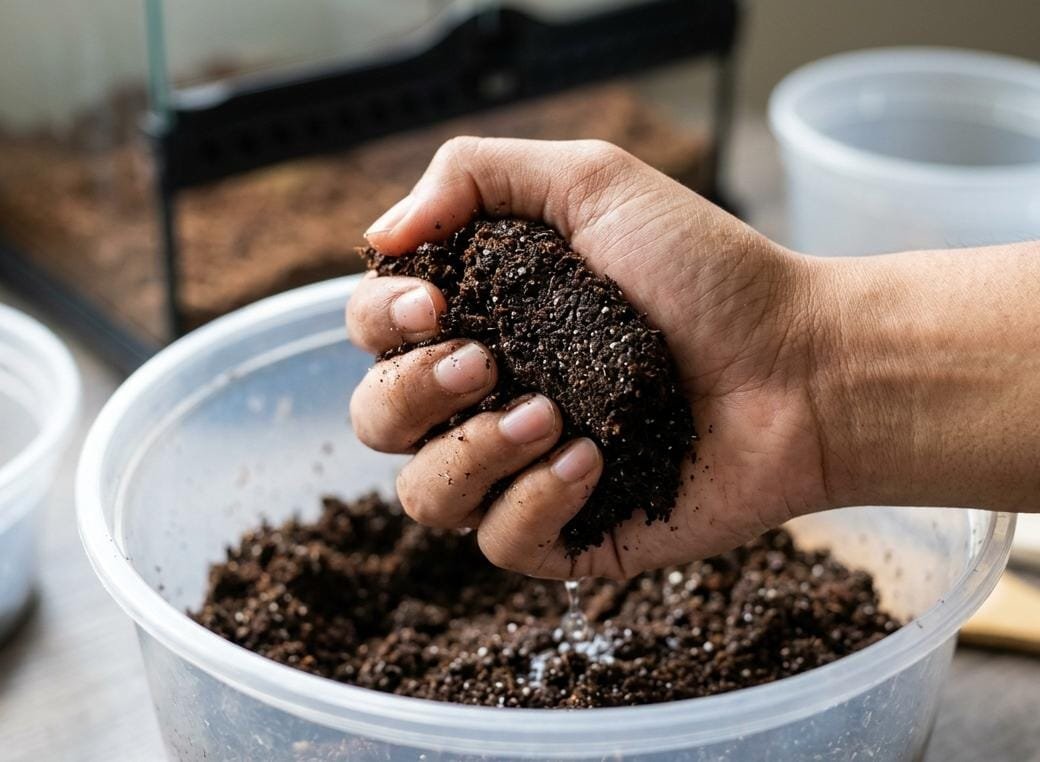
Substrate holds water and lets it out slowly. This keeps humidity steady between mistings, instead of letting it rise or fall too quickly. Richard Gallon’s review of substrates used in tarantula vivaria for the British Tarantula Society calls water retention a substrate’s chief job, and he points out that different species need very different humidity levels depending on their natural habitat.
2. Burrowing support
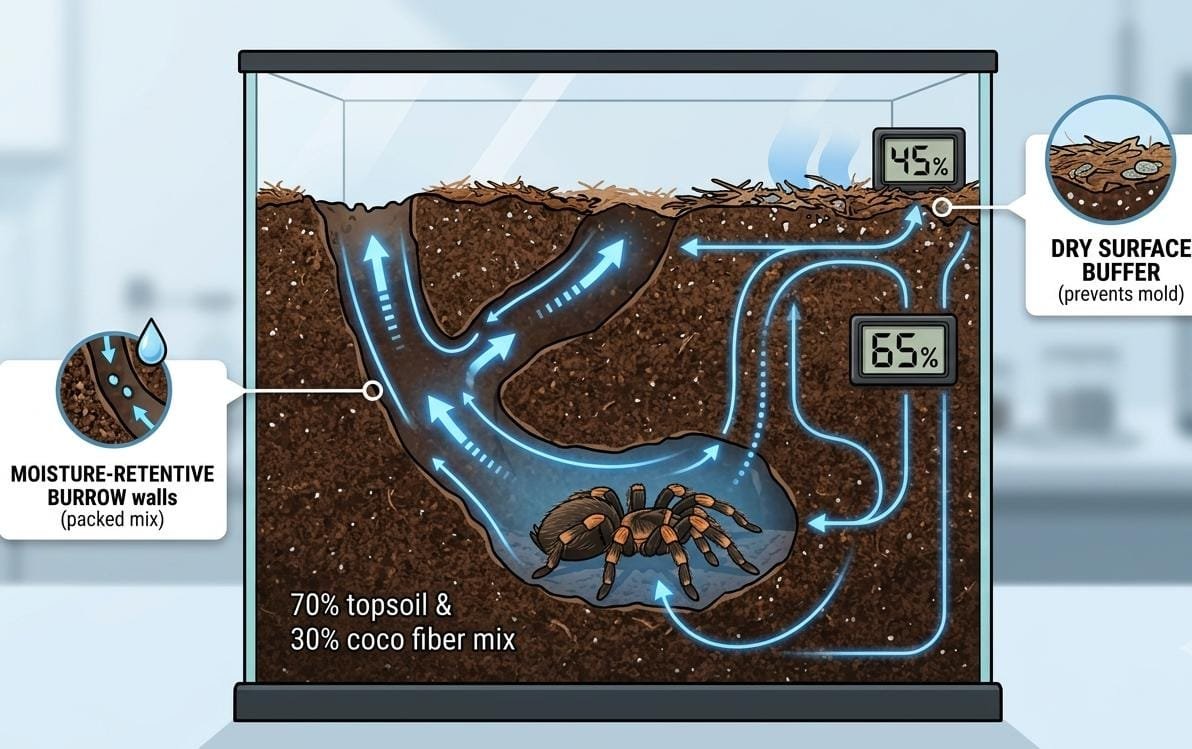
For burrowing species, the substrate should be firm enough to hold a tunnel without falling apart. It’s more about how well it packs than how wet it is. For example, Bone-dry coco fiber will always crumble, no matter how much you use.
3. A safe surface and fall cushion
Even tarantulas that don’t dig need a stable surface to walk on and something soft to break their fall if they slip from a water dish or decoration.
4. Odor and waste management
Substrate absorbs and helps break down leftover prey and waste. This becomes more important than most beginners expect after a few months with the enclosure.
Each of these functions matters more or less depending on the species. Here are a few examples:
- For a terrestrial tarantula that rarely burrows, substrate depth and structure may be relatively straightforward.
- For a fossorial species, substrate may be one of the most important parts of the entire enclosure.
- For an arboreal species, substrate is considerably less important than vertical structure, cork bark, webbing opportunities, and ventilation.
5 Things to Look for in a Good Tarantula Substrate
Now that you know what substrate does, let’s look at what you should consider when choosing one:
1. It should be safe
Avoid products containing potentially harmful additives such as fertilizers, pesticides, wetting agents, or other unnecessary chemicals.
This is especially important for garden or potting products. A bag labeled “organic” doesn’t automatically mean every ingredient is appropriate for an invertebrate enclosure.
Always read the list of ingredients. If you’re not sure what’s in a product, don’t use it just because someone online said it was good.
2. It should suit the species.
A substrate that works beautifully for a terrestrial New World species may be completely unsuitable for a fossorial species that needs to construct a stable burrow.
Always consider your tarantula species before choosing a substrate.
3. It should hold an appropriate amount of moisture.
This does not mean the enclosure should be wet. A common mistake is thinking that humidity means the enclosure should always be wet. Many tarantulas do perfectly well with a mostly dry surface and access to water, while some species benefit from a more moisture-retentive setup.
The goal is to give your tarantula the right amount of moisture for its species, not to make the enclosure as wet as a rainforest.
4. It should provide stability.
If your tarantula likes to dig, a fluffy substrate that falls apart easily won’t help.
A good burrowing substrate should pack tightly enough to hold a tunnel without getting waterlogged.
5. It should allow good enclosure management.
You still need ventilation, easy access to the spider, and a way to remove uneaten prey or waste.
A substrate that looks nice but keeps the enclosure wet and stuffy isn’t helpful. Once you know what to look for, it helps to compare the different materials.
8 Main Types of Tarantula Substrate
Here are eight materials you’ll find while shopping, along with what each one is good for:
1. Coco Fiber (Coir)
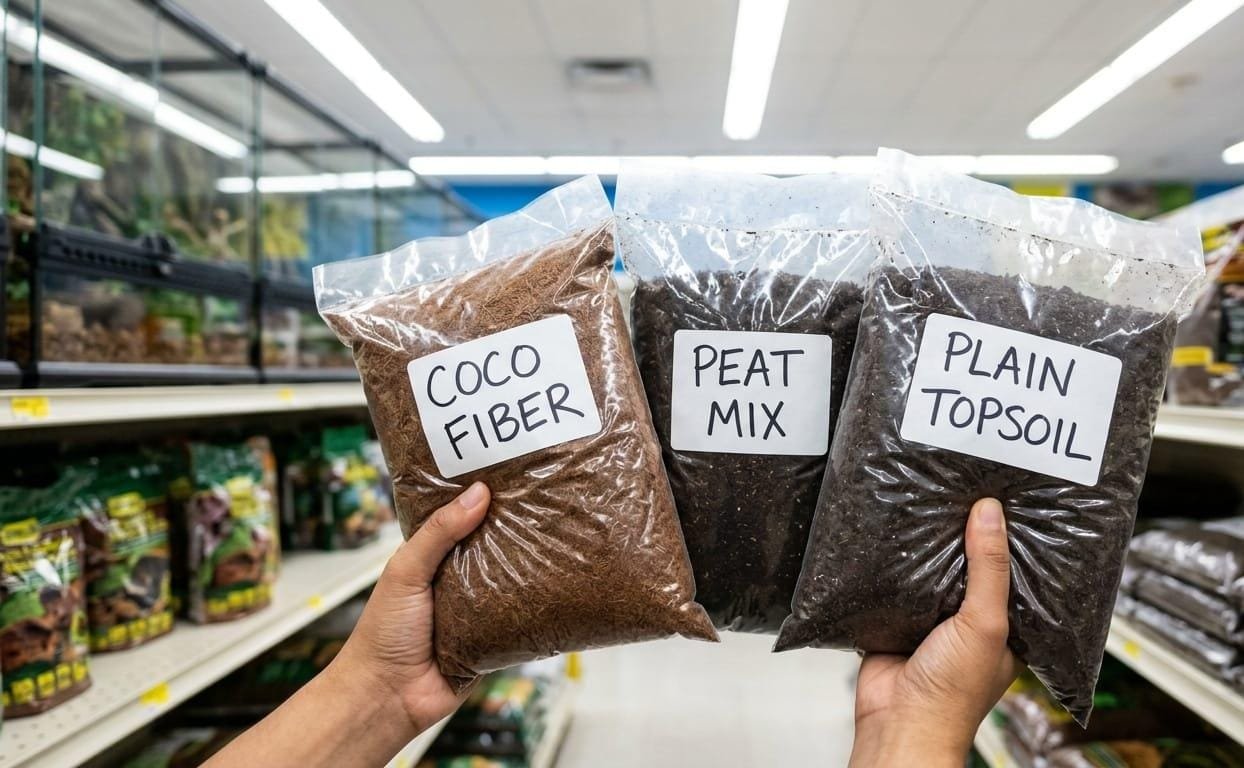
Coco fiber is the most commonly recommended substrate because it’s affordable, easy to find, and works well for many species.
Pros:
- Holds moisture well without becoming waterlogged easily.
- Compresses into stable burrow walls, making it solid for burrowing species.
- Inexpensive and sold in compressed bricks that expand with water, so a little goes a long way.
- Generally low odor when maintained properly.
Cons:
- It can get quite dense when packed down, which some keepers say makes it harder for very small slings to burrow.
- Rinse or prepare it before use because raw coco fiber can contain extra salt, depending on where it comes from.
- It can dry out unevenly if you don’t layer it carefully.
Best suited for:
New World terrestrial and moderate burrowers like Grammostola, Brachypelma, or Tliltocatl species
2. Peat-Based Substrate
Peat moss and peat-based mixes were more popular before coco fiber became common. They are still used in some setups, especially in the UK where peat products are easier to find.
Pros:
- Excellent moisture retention, arguably better than coco fiber for consistently humid setups.
- Fine texture that some burrowing species take to very readily.
Cons:
- Environmental apprehensions about peat extractions have made it less popular in recent years, and some keepers avoid it for that reason.
- It can become acidic over time, which can affect the substrate’s long-term health.
- It can compact more densely than coco fiber, which isn’t ideal for tarantulas that like looser digging material.
Best suited for:
It suits best for keepers who already have a bag on hand or are maintaining an older-style humid setup for species like Theraphosa or Pamphobeteus.
3. Topsoil (Organic, Pesticide-Free)
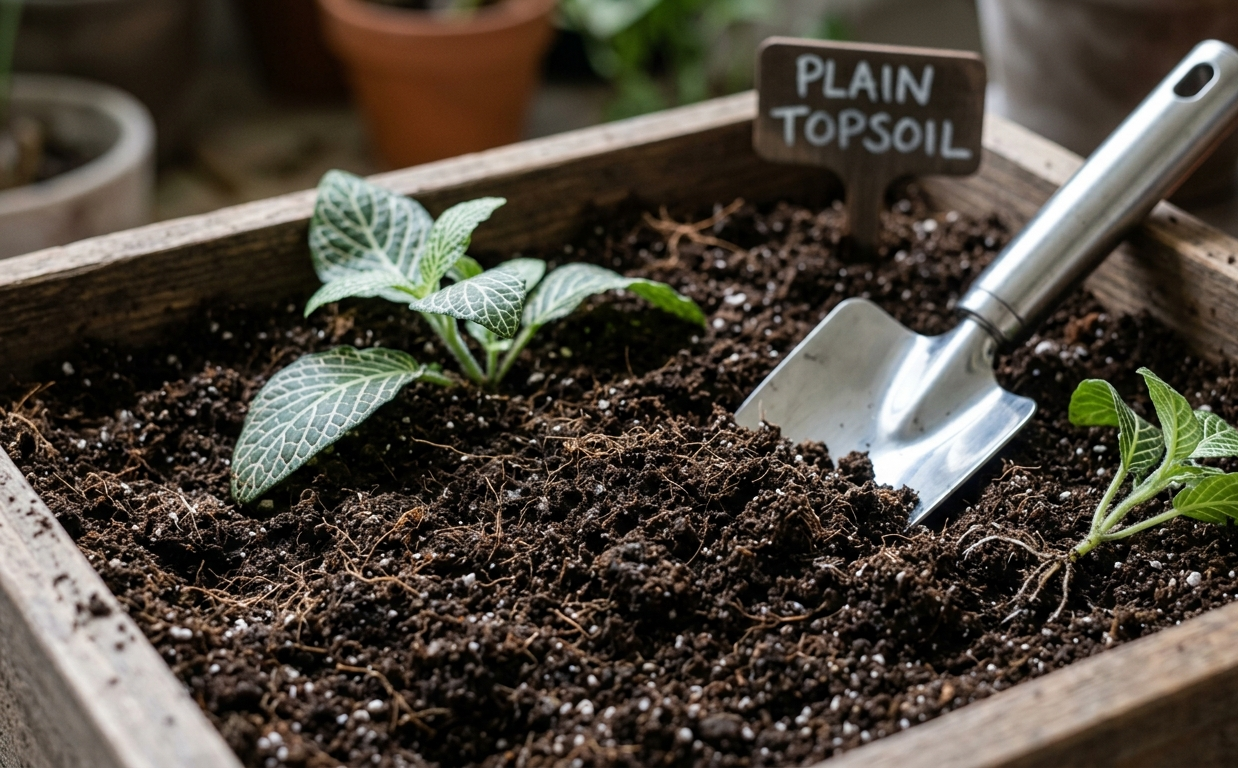
Plain organic topsoil without added fertilizers or pesticides is also a good option, especially for spiders that need a firm, packable substrate for deep burrowing. You can use it in blends, mixed with coco fiber or sand to control the texture.
Pros:
- Packs firmly, making it excellent for tarantulas that dig deep, stable burrows.
- Widely available, sometimes even more affordable than specialty reptile/invert substrates.
Cons:
- Finding truly pesticide-free and fertilizer-free topsoil means reading labels carefully, since many bagged topsoil products aren’t made for animal enclosures.
- Quality and composition may differ considerably among brands and batches.
- Some topsoil holds moisture unevenly, which can create spots that are too wet or too dry if you don’t mix it well.
Best suited for:
It’s good for species that dig deep, permanent burrows and need walls that won’t cave in—for example, Cyriopagopus or other serious fossorial diggers.
4. Bioactive Substrate Mixes
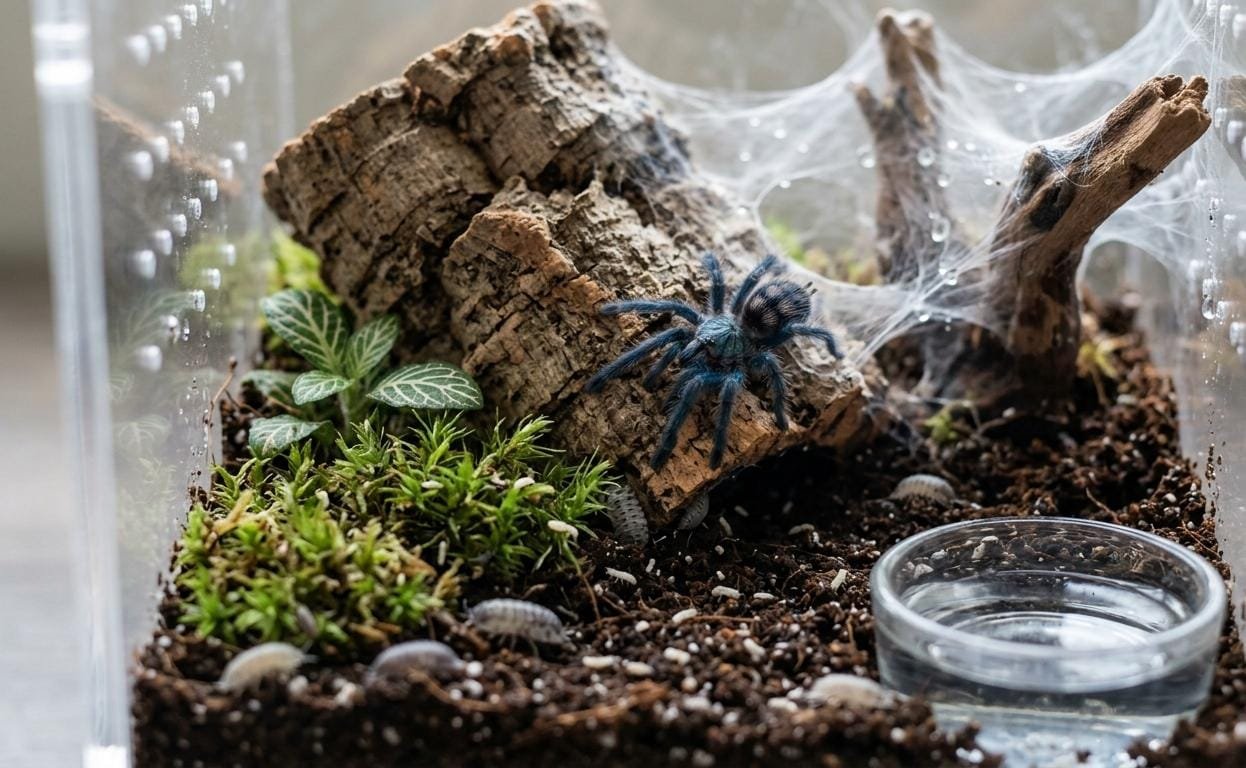
Bioactive setups are more complex. They use live cleanup crews like springtails and isopods, and a substrate blend that acts as a small ecosystem instead of just covering the floor.
Pros:
- They reduce maintenance over time because the cleanup crew handles mold, waste, and organic buildup that would otherwise require you to change the substrate by hand.
- Creates a more naturalistic, humidity-stable environment.
- Appeals to keepers who want to display-quality enclosures alongside functional ones.
Cons:
- They are more expensive and take more effort to set up correctly than a simple substrate fill. You need to know how to maintain the supporting ecosystem, not just care for the tarantula.
- It’s not the best option for every species. For example, dry, arid species don’t benefit from a bioactive setup as much as those that like humidity.
- If you don’t take care of the cleanup crew, a poorly balanced bioactive setup can cause more problems than a simple substrate.
Best suited for:
It suits keepers of humid or semi-humid species who want a lower-maintenance, naturalistic setup. For example, Pamphobeteus or Avicularia enclosures with live plants and a working cleanup crew.
5. Mix of coco fiber and topsoil.
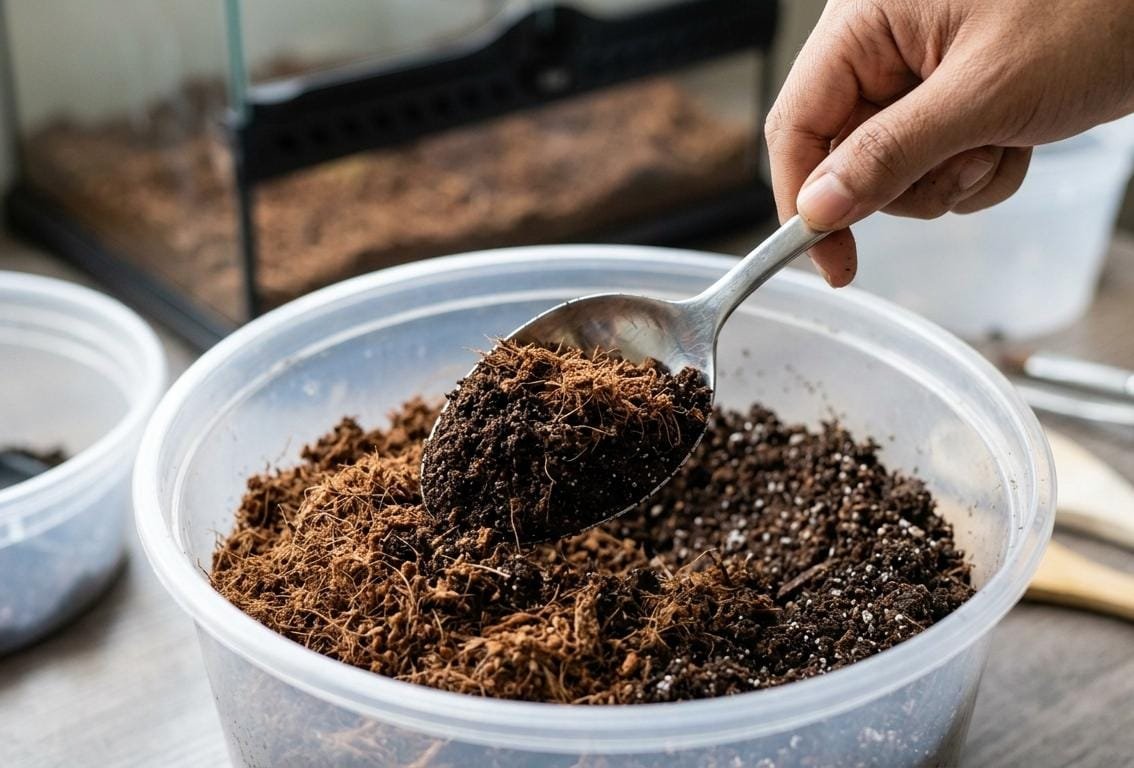
A popular tarantula substrate is a mix of coco fiber and topsoil. Coco fiber helps with moisture and texture, while topsoil adds density and stability. There’s no perfect ratio for every species. For example, about 70% topsoil to 30% coco fiber works for drier, burrowing species, while a more even mix is good for general setups.
To test the mixture, squeeze a damp handful. If it holds its shape without dripping, it’s good. If it falls apart, it won’t hold a burrow.
6. Sand
Sand might seem like a good choice for desert species, but it isn’t a good substrate because it won’t hold a burrow. However, you can add a little sand for texture in dry blends. Avoid calcium sand, colored sand, or anything sharp or dusty.
7. Vermiculite and perlite
These materials absorb moisture well, which is why some keepers use them. But just absorbing moisture doesn’t make them good substrates. Some keepers add them in small amounts to improve drainage or humidity, but you shouldn’t use them as the main substrate.
8. Ready-made commercial substrates
You can get ready-made tarantula substrates for tropical or bioactive setups that support drainage and microfauna. These tarantula substrates are convenient and consistent, but a bit expensive.
Alternatively, you can make your own mix with coco fiber and topsoil, which is usually much cheaper, especially if you have several enclosures.
Which Substrate Suits Which Tarantula Species
This is the important part, so let’s get specific:
1. Arid or desert species
(Grammostola pulchripes, Aphonopelma chalcodes) do best in dry conditions. A mixture of about 70% topsoil and 30% coco fiber holds its shape without staying damp. These species handle dry substrate much better than anything too moist.
2. Humid or rainforest species
Humid terrestrial species like Pamphobeteus or Theraphosa do well on coco fiber alone, kept damp but not soaked.
3. Burrowing tarantulas
These species need a deep substrate more than a specific material. So, use at least 4 to 6 inches (10 to 15 cm) of a peat or coco blend, packed firmly so tunnels don’t collapse.
4. Arboreal species
They don’t need much substrate because they rarely go to the ground. One or two inches (2.5 to 5 cm) of basic coco fiber is enough. Focus on providing vertical anchors like cork bark instead of worrying about the floor.
Substrate Depth and Preparations
Many beginners overthink this part. Deeper substrate isn’t always better. Instead, match the depth to your tarantula’s behavior, not just what looks impressive. For example: A three-inch layer of coco fiber isn’t helpful for an arboreal species that never goes to the ground.
1. General depth guidelines:
Terrestrial, non-burrowing species do well with 2 to 3 inches (5 to 7.5 cm) of substrate. Burrowing species need at least 4 inches (10+ cm), sometimes more for larger adults. Arboreal species need only 1 to 2 inches (2.5 to 5 cm).
2. Are you setting up for a sling?
Tarantula substrate often needs a shift when your spiderlings start growing, so our tarantula sling care guide walks you through the full setup.
3. Do you need to bake or microwave substrate?
People often debate this online. Commercially packaged, sterilized substrates don’t need baking. However, if you’re using your own topsoil, a quick bake at around 200°F (93°C) for 20 to 30 minutes will kill any pests or mold spores. It’s a simple precaution, not a must, but skipping it with unverified soil is how mite infestations can start.
4. Dry-to-moist ratio
As a starting point, dampen the substrate until it holds its shape when squeezed but doesn’t drip. Then adjust for your species. Arid setups should dry out almost completely between light misting, while enclosures for humid species should stay lightly damp and never bone dry.
What Materials to Avoid Entirely as Tarantula Substrate
Here’s a short list of substrate materials you should completely avoid:
- Cedar and pine shavings
- Fertilized soil
- Pesticide-treated soil
- Anything with unlisted artificial additives
- Gravel as a primary substrate
- Permanently waterlogged substrate
That last one often catches people who focus on the hygrometer reading instead of the whole enclosure. A constantly soggy setup invites mold and mites, and it’s dangerous to a tarantula’s respiratory system in a closed space.
Do You Need a Bioactive Tarantula Substrate?
No, you don’t need a bioactive tarantula substrate.
Bioactive setups, where springtails and other cleanup crew organisms help process waste and support live plants, can be beautiful and low-maintenance once established. But your tarantula doesn’t need a miniature rainforest ecosystem to be healthy. A simple, clean, species-appropriate enclosure works just fine.
Quick Substrate Cheat Sheet
| Material | Best use | Main advantage | Main limitation |
| Coco coir | General-purpose base | Affordable and moisture-retentive | Can lack burrow stability |
| Suitable topsoil | Terrestrial/fossorial mixes | Dense and structurally useful | Must be additive-free |
| Coco + topsoil | Burrowing/terrestrial setups | Balance of texture and structure | Requires mixing |
| Sphagnum moss | Moisture pockets/additive | Excellent moisture retention | Too wet if overused |
| Peat-based mixes | Certain specialty mixes | Moisture retention | Not necessary for most setups |
| Ready-made substrate | Convenience/naturalistic setups | Simple and consistent | More expensive |
| Sand | Limited specialized use | Adds texture/density | Usually unnecessary as a major component |
| Vermiculite | Occasional additive | Holds moisture | Poor choice as primary substrate |
Frequently Asked Questions
- What is the best tarantula substrate overall?
There isn’t one best substrate. Coco fiber, additive-free topsoil, and mixes of both work for most terrestrial and fossorial species. The right choice depends on whether your tarantula is terrestrial, fossorial, or arboreal, and on its specific moisture needs.
- Can I use normal potting soil for a tarantula?
Yes, you can, but only if you check every ingredient. Avoid anything with fertilizer, pesticides, perlite, or wetting agents, even if the label says “organic”.
- Is topsoil better than coco fiber for tarantulas?
No, not for all tarantula species. Topsoil holds a burrow shape better, while coco fiber is lighter and easier to work with. You can combine them for the best substrate.
- How often should I replace my tarantula substrate?
There’s no set schedule, but it’s best to replace the substrate when it becomes contaminated, stays damp, smells bad, or both.
Conclusion
Tarantula substrate is one of the few enclosure decisions you usually only make once. Once your tarantula has settled in and started webbing or digging, you won’t want to tear it all out and start over. So it’s worth spending a few extra minutes up front to match the mix to the species, instead of just grabbing the bag that looks most like dirt and wishing for the best.